

Listen on YouTube, Spotify and Apple Podcasts
More than 3,000 people die on the world's roads every day, and hundreds of thousands more survive with life-changing injuries. Road crashes are the leading cause of death for young people in every country, yet the toll is so familiar that it barely registers as a crisis. iRAP, the International Road Assessment Programme, exists to change that. It is a UK-registered charity that works in more than 130 countries and gives engineers and road agencies free tools to measure how safe a road really is and plan how to fix it.
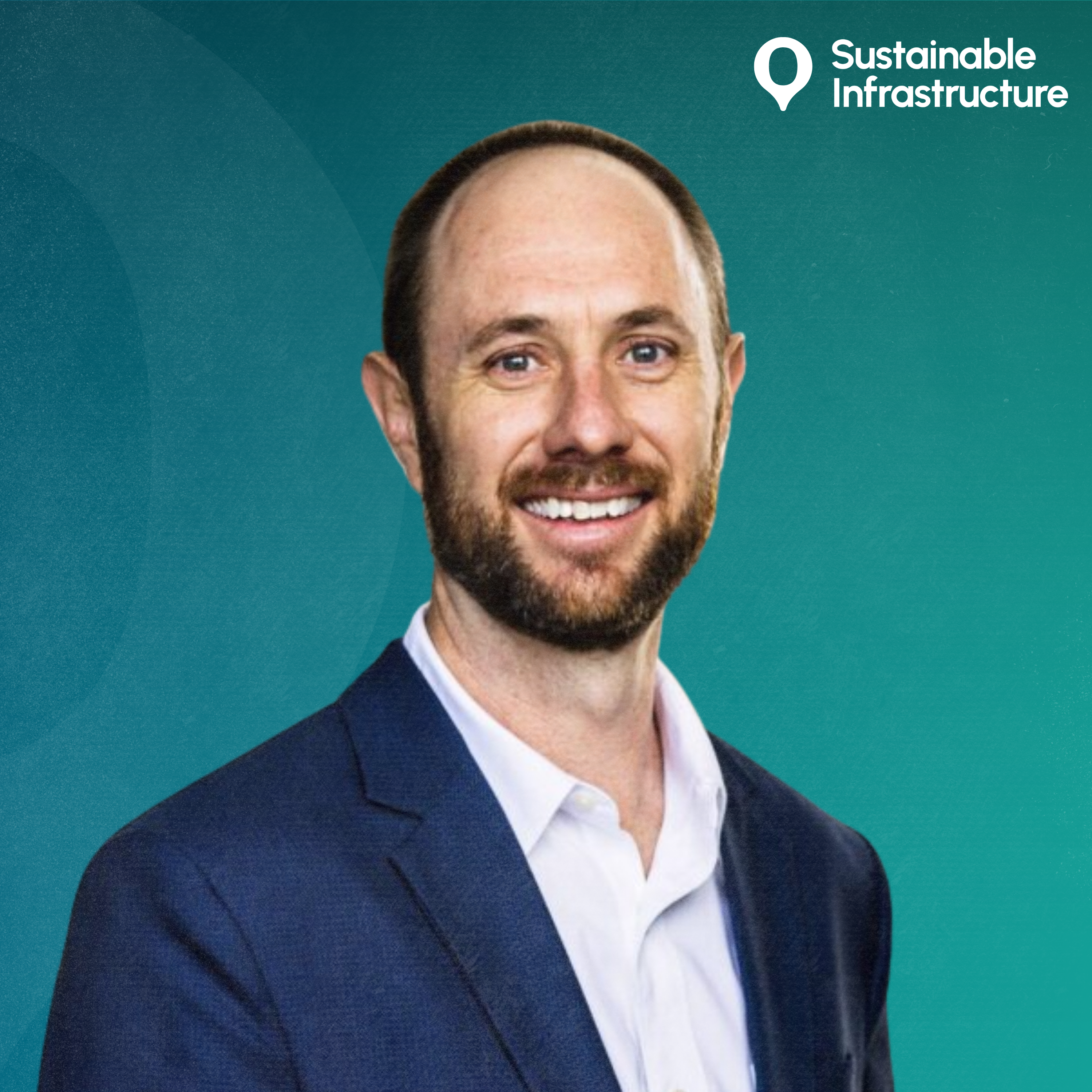
Greg Smith is its CEO. He is an engineer who started in local government in Sydney, spending as much of his time listening to residents as he did on traffic models. That mix of technical rigour and community connection runs through how he leads iRAP today: one shared methodology, open to everyone, built on the belief that a road's design decides more about your risk than your own driving does.
In this episode, Greg and Nicolas Miravalls, co-founder and CEO of ORIS, cover how the star rating system works across the whole life of a road, why a 5% fall in global deaths is both small and encouraging, what happens when AI lets agencies rate entire networks, and why giving the tools away is the model that scales.
Why road safety is a design problem, not a driver problem
The default explanation for a crash is a person: a careless driver, a distracted pedestrian, a cyclist who should have known better. Greg’s community calls this victim-blaming, and he describes it as pervasive. Behaviour does initiate many crashes. His point is that mistakes are normal for humans; we are fragile, and a system built on the assumption that nobody ever errs will keep killing people.
The evidence he points to is that the road environment and speed change risk materially. iRAP turns that into a simple output. Every road gets a star rating for safety, from one star (highest risk) to five stars (lowest risk), and each road user type gets its own rating. A road can score well for vehicle occupants and badly for pedestrians. That single metric then feeds an economic case: how many lives a design change would save, and what the benefit-cost ratio would be.
Because it is one tool and one methodology, it works at every stage: early planning and land use, concept and detailed design, operation, and maintenance, where a road left to deteriorate or a safety barrier not replaced quietly raises risk. For infrastructure teams, that is the useful part. Safety stops being a late review comment and becomes a number you can compare across design scenarios.
“You can be, you know, the same person driving along in the safest car in the world, obeying all the laws, and the risk that you face death or serious injury changes as you drive along the road, and that’s linked to the road environment.”
Why the UN target of halving road deaths by 2030 is still worth chasing
The UN Decade of Action for Road Safety set a goal of halving deaths and injuries between 2021 and 2030. We are at the midpoint, and the World Health Organization’s latest global status report estimates roughly a 5% reduction in global deaths since the decade began. Greg does not dress that up. It is far from 50%. He also notes that this was achieved against the headwind of growing mobility, with more people riding motorcycles and moving around, and that progress on problems like this rarely comes in a straight line.
The evidence that it can be done is specific. Vietnam, where Greg was speaking from, has seen large falls in deaths over the past ten to twenty years through planned interventions on helmet wearing and on high-speed intercity connectors. Uruguay, Senegal and China have recorded strong reductions on large-scale projects. A Johns Hopkins University estimate puts the deaths and serious injuries prevented by infrastructure projects using iRAP tools at about 860,000.
The gap between countries is the hard part. More than 9 in 10 road deaths and serious injuries occur in low- and middle-income countries, where roads carry a much more complex mix of users. Even rural roads have many pedestrians, which is exactly why a rating per road user matters. Greg’s one change for the next 12 months is political: a president or prime minister who declares road safety a national priority. He also welcomes the new UN Decade of Sustainable Transport, because safety cannot be separated from accessibility, green roads and resilience. They are facets of the same challenge, and the earlier a project plans for all of them, the cheaper it gets.
“So it’s small, compared to the fifty percent that we’ve got to get to, but these things often don’t happen in a linear way.”
What changes when every road can be star rated
This is the part Greg says gets him out of bed. ViDA, iRAP’s free online software, produces star ratings, fatality estimates and investment plans. It is used in more than 100 countries and in projects worth more than $120 billion. Yet it has star-rated around 4 million kilometres, out of about 180 million kilometres of road. The internal moonshot is to star-rate every road in every country, every year.
Data and AI make that thinkable now. Satellite imagery, asset inventories, vehicle probe data and image recognition are all growing fast, and AI can combine them into safety intelligence. Greg accepts that early analysis will be low resolution and that design work needs high resolution. He believes low-resolution coverage across a whole network is still useful, and resolution can be raised where it counts. Put the data on a map, including the long-running road safety libraries of bodies such as the International Road Federation, and the value multiplies. Once ratings exist everywhere, new users appear: a rideshare company could score every street it operates on.
For iRAP, the implication is a shift from training people to produce ratings to helping agencies act on them. The dream Greg describes is a single view for a road agency that layers star ratings, flood exposure, pavement condition, and pedestrian movement, which closely matches the multi-criteria decisions ORIS is built around. It also changes who is hired. Data and GIS skills matter more, and his lesson from the past year is that you no longer need to learn to code; you need to know what you want and use the tools to build it.
“Our moonshot goal internally that we talk about is how do we help star rate every single road in every country every year?”
Why one of the most widely used road safety tools is free
iRAP is a charity by design. Building the methodology and tools is expensive, and it is far more efficient for every country to use one shared set than to each build its own. Widespread use also generates the evidence and data that keep improving the model. The FIA Foundation has been the core donor from the start, with other foundations supporting over the years. Income from projects such as assessment quality checks, new tools, and training goes back into the tools, which Greg calls a profit-for-purpose model.
The second half of the model is also quite unique. iRAP wants companies to become accredited, use the tools, and do business with them because, in Greg’s view, road safety will not be sustainable until people can make money doing it. Hundreds of billions of dollars are spent on roads each year. Road accidents carry enormous costs for society. Between those two statements, there is a constant battle to keep road safety investments high on the public agenda. The charity fills that gap.
Trust is the obvious question with a free, open tool, and Greg’s answer is transparency. The methodology is standardised and data-driven so that auditors can review the inputs. Changes to the model must be backed by evidence, not opinion, and independent technical and policy advisory committees report to the board. He has not seen fake data used to produce a convenient rating, and asks who would want to cheat on road safety.
“Unless companies can make money, out of doing road safety, road safety is never gonna be a thing.”
His advice to anyone starting tomorrow
Ask the question. On every road infrastructure project, Greg wants someone to say: what is the star rating of this road? He says that just asking it will lead to good solutions. It works because it forces safety into the room at the cheapest point to act. The second piece of advice is aimed at practitioners. You do not need to be a programmer to use AI tools well. Take time to experiment and figure out what you want them to do.
Full interview
The following is an edited transcript of the conversation.
Design, not drivers: how iRAP approaches road safety
Nicolas Miravalls: Our guest today is Greg Smith, CEO of iRAP, the International Road Assessment Programme, a global charity operating in more than 130 countries that has spent nearly two decades building the evidence base and tools to make roads fundamentally safer. Today we are going to explore one of the fundamental aspects of the social pillar of sustainability in infrastructure: road safety. How is it embedded in infrastructure projects, are we making enough progress, and what does digital change in the way we assess and invest in safer roads? Greg, welcome to Sustainable Infrastructure. Can you tell us briefly about yourself and about iRAP?
Greg: Sure. Thank you for inviting me, Nicolas, and hi to all the listeners. About me: I'm an engineer. I started my career in local government in Sydney, Australia, as a traffic and transportation engineer. That experience was formative because it gave me a chance to work on the technical aspects of traffic and transport. But the part I didn't realise would be so strong was the community connection. At least half of my role was speaking with the community and understanding their challenges moving around the city, and safety was such a prominent topic for them. So I got a great enjoyment out of combining the technical and the human, community aspects of road safety.
I moved to a national role with an association in Canberra for some time, and then to the international role with the International Road Assessment Programme. iRAP is a charity set up in the UK. Most of our team is spread around the world, we're very much a digital organisation, and we pretty much all work remotely. As a charity, what we do is provide tools and methodologies that anyone can use for free around the world to assess the safety of their streets, roads, highways and designs, and to come up with plans for how you might improve them.
If I might, I'd say a few words about why road safety. It's still a bigger problem than most people realise. More than 3,000 people lose their lives on the roads every single day around the world, and literally hundreds of thousands more suffer often life-changing injuries. Crashes are the biggest cause of death for young people in every single country. Apart from the huge social cost, there's a huge financial and economic cost. About a quarter of people who survive a crash have still not fully recovered within six months, and about half have not been able to return fully to their normal lives six months after. So the impact carries on for a long time. And about forty percent of road deaths and serious crashes are work-related. That shows the impact crashes have on businesses and operations, but also the huge potential that companies, and people linked to logistics, have to improve safety.
Nicolas Miravalls: Those are impressive numbers that everyone should be aware of. I was thinking it's bigger than any pandemic we talk about, every single year.
Greg: It's very severe and it's largely hidden. People have got used to this happening in their lives, and that's part of the challenge in improving safety.
Nicolas Miravalls: Safety is about both driver behaviour and better infrastructure. How do you direct your efforts between the two?
Greg: It's a good question, and it gets to the heart of why road safety is such a challenging topic. You mentioned roads and behaviour, but in that mix you also have the vehicles, the way post-crash care happens, and all the administration and governance around it. So it's a really complex topic. But there is a widespread perception that crashes are caused by people not being good enough drivers, or being careless, and therefore it's their fault. Whether it's the drivers, pedestrians or bicyclists, it comes down to blaming, and we call it in our community blaming the victims. That's been pervasive. It's what everyone thinks of first.
No doubt crashes are often initiated by a behavioural aspect, but from our perspective there are two elements. First, that behaviour is normal for humans. We all make mistakes from time to time. We're far from perfect, and we're very fragile, so when we do make those mistakes the consequences are very severe. In designing a system, we need to appreciate we're dealing with humans, not robots. People are going to make mistakes. Second, the evidence is very clear that the way the road environment is designed, and the speeds, have a material impact on the risk someone faces. You can be the same person driving along in the safest car in the world, obeying all the laws, and the risk that you face death or serious injury changes as you drive along the road, and that's linked to the road environment. The evidence for that is very strong, so we know that changing the road design and changing speeds has a material impact on the level of safety people face.
Nicolas Miravalls: That's back to infrastructure, and your daily action on infrastructure. At what point do you enter the picture with finance and banks, or whoever is planning a project?
Greg: Our tools can be used at every stage in a road's life cycle. At the very early planning stage, they can help think about the level of risk from a high-level, strategic plan, and link to things like land use planning: where do we build new schools in a city, and how are they placed relative to where people live and the roads children might have to cross. They can be used all the way through design, from the conceptual stage into the detail stage. They can measure existing roads, and be used while roads are operating and through to maintenance as well. If you don't maintain a road, the risk of crashing on it can increase as it deteriorates, or when things like safety barriers are not replaced.
With the tools, we can give a road a star rating for safety. One star is the highest risk and five star is the lowest risk. Very importantly, you can give a different star rating for each road user type. You might get a road with a good star rating for vehicle occupants but a poor one for pedestrians. With that metric we can build an economic and financial case for what you might do to change a design or a road network. It helps predict how many lives you might save and what the benefit-cost ratio is. So it really can be used at all phases. In practice there's a spectrum, from very best practice right through to situations where we're a bit disappointed and could do much more.
Nicolas Miravalls: Are those different tools for different phases, or the same tool embracing the whole thing?
Greg: Fundamentally it's the same tool. When we developed this methodology more than twenty years ago, a key design criterion was to create something adaptable to many different environments, because as you move around the world there are vastly different road contexts, not just in infrastructure but in the built environment and the way people use the roads. But by building a single tool and a single methodology, it becomes a global standard. That gives you all sorts of potential for benchmarking, but also for transparency, and the ability for people all around the world to understand how the one tool works.
Are we making progress?
Nicolas Miravalls: Now the burning question: are we progressing? Let's use the UN Decade of Action for Road Safety as guidance. It runs from 2021 to 2030 with the ambition to decrease road deaths and injuries by 50%, and we are in the middle of it in 2026. Is this going well? Can you share some numbers?
Greg: The first thing to know about me is that I'm eternally optimistic, so I'm always going to say yes, we can get there. I genuinely believe that, and particularly with advances in digitization of data and AI, we're going to see some impressive and exciting improvements.
The Decade of Action is a UN declaration that countries all around the world have supported through the UN General Assembly. The target is to halve the number of deaths and injuries globally by 2030. Many countries have made really impressive progress. At the moment I'm in Vietnam, where they've seen very large reductions in deaths over the past ten and twenty years, not by accident but through planned interventions on helmet wearing, for instance, and improving their infrastructure, especially on the high-speed intercity connectors.
But we still have a long way to go. The World Health Organization does a global status report about every three years, and the last one estimated about a five percent reduction in global deaths since the start of this decade. So it's small, compared to the fifty percent that we've got to get to, but these things often don't happen in a linear way. They can happen exponentially, provided we keep the pressure on. It's also interesting to note that when you take into account the huge growth in mobility, with more people riding motorcycles and moving around, that five percent is actually very impressive. It's pushing against a headwind of more and more people using the roads.
There are promising signs at a more individual level too. We've worked with Johns Hopkins University to estimate the impact the iRAP programme is supporting, and the estimate is that about 860,000 deaths and serious injuries have been prevented by road infrastructure projects that use the iRAP tool. At country level, Uruguay, Senegal and China have all recorded very impressive reductions in deaths on large-scale projects. So we are making progress, but we can't relax. There's a lot more work needed.
Nicolas Miravalls: Five percent is a beginning, and with all this effort we are also containing the growth in traffic. Hopefully the curve accelerates at some point. A word on the disparities between developed and developing countries, where most accidents and injuries happen. Do you have a special focus, or different tools, for those countries?
Greg: More than nine out of ten of the world's road deaths and serious injuries happen in low and middle-income countries, so there's a huge disparity. We work very much with developing countries. Part of our charitable effort is making sure the tools we produce are available to them, and we also provide a great deal of support in training, and in building the ecosystem that makes those tools usable and supported for decades.
That said, our tools are very widely used in high-income countries as well, because even though deaths are lower in absolute terms, they're still incredibly concerned about them. But developing countries have a special challenge, which is that the road environments are very often complex. In Southeast Asia, Sub-Saharan Africa or Latin America you find a great deal more types of road user. Even on rural roads, pedestrians are very common, whereas in high-income countries that's quite different. So there are fundamental differences to navigate, and the fact that you can produce a different star rating for different road users is incredibly important, particularly for low and middle-income countries.
Nicolas Miravalls: As we chase progress, there is another UN decade coming, on sustainable transport, starting this year and running towards 2035. I think it matters because it brings multiple disciplines together to push for a comprehensive transport system, with environment, social and economics all together. How do you approach it, and how does it complement the road safety decade?
Greg: We're very pleased about the new decade of sustainable transport because it puts safety into a broader context, which it needs. It's not a niche topic by itself, it's woven into the broader transport topic. The reality is you cannot separate safety from accessibility from green roads and resilience. These are all different facets of the same challenge, and when we put them together we leverage the strengths of each approach.
To make that decade strong, we need clear commitment from countries that they will develop and implement plans and mobilise finance. There needs to be good guidance from organisations like ours on how to translate the lofty goals of the decade of action into implementable policies and bankable projects that make a difference. Good communication is at the heart of this. That's something I learned in local government and it has been constant throughout my work at iRAP: unless people know about these topics, what's available and what the commitments are, it's very difficult to act. It's easy for people in cities, provinces or even countries not to have heard anything about these decades of action. So this podcast, I congratulate you, is an important part of the solution.
Ultimately we also need to mobilise finance, and that means making compelling cases about how it will make measurable differences to people's lives, whether that's creating jobs or helping children get to school safely. There's a strong demand on us to help build that case.
Nicolas Miravalls: I also think it's a matter of mindset. What all these disciplines have in common, whether green roads, safe roads, biodiversity or accessibility, is the mindset. It is to prepare the project early enough so that we have the right solutions, instead of the current approach, which is very reactive. We need to make this upstream so we go into a project with a more comprehensive approach to all of it. It's a common fight to make sure this comes early.
Greg: Absolutely. We've seen it many times. If you can, like you say, go far upstream and plan early for safety, resilience, accessibility and green, it becomes much easier and much more cost-effective.
Digital tools, AI and the next step for ViDA
Nicolas Miravalls: Which leads us to digital, which offers capacities we didn't have before. Your ViDA software is the flagship of your digital capacity. How does digital help, and how could it accelerate your action on road safety?
Greg: This is the area I'm most excited about. It's the one that has me leaping out of bed, because every day there's an opportunity to seize. I was recently at the Asian Development Bank's transport forum, which happens every two years, and it was a moment where a lot of the concepts and ideas talked about around this, with AI, started to become tangible. People are using these tools to take steps much more rapidly, which is incredibly exciting.
ViDA is the free online software we make, where you can produce star ratings, fatality estimates and investment plans. It has been really effective at reaching scale. It's used in more than a hundred countries, and in projects with a total value of more than a hundred and twenty billion dollars. But we still haven't scratched the surface. About four million kilometres of star ratings have been done, but there are more like a hundred and eighty million kilometres of road, give or take. So we're thinking about how to help countries reach all their roads. Our moonshot goal internally is: how do we help star rate every single road in every country every year?
When you think about that scale, it becomes transformative. For every kilometre of road out there, someone is responsible for managing it. If we can take the often disparate information about roads, put it into ViDA, add some intelligence, and give every engineer at least some intelligence about the safety of their infrastructure, you get an explosion of potential for improvement. It also unlocks new uses of safety information. A rideshare company, for every single street it operates on, can have a score for infrastructure safety, and can start to manage its trips for safety in a strategic way. This is starting to become reality now.
There is so much data out there about roads: satellite imagery, road asset databases and inventories, probe data from vehicles collecting speed information, image recognition. This data is starting to explode, and AI tools give us a chance to accelerate how we put that data together and add road safety intelligence to it. So I can see us on an exponential curve in how we support countries with data to make strategic decisions about their networks.
Nicolas Miravalls: That is very exciting. A big part of your action today is capacity building in countries, making sure engineers can evaluate and use the systems properly to rate roads. That might shift from using the current software to using AI to run the software, or to do something else. How do you position on that?
Greg: Fantastic question, and exactly what we're discussing internally. We have spent a lot of time training people how to do the assessments, how to collect the data, how to get to the star ratings for a road or design. With that being automated and scaled up, we have a fantastic opportunity to pivot and think: now that you have the data, what do you do with it? How do you take the star ratings and investment plans and implement them well? Road agencies, whether national, provincial or local, have challenges with their capacity to implement, because it's a complex process to take a concept plan and put it in place on the ground. That's where we can focus more in the second half of the safety decade, and key to it is integrating this data with other systems.
The dream, I think, is for a road agency to have a system that shows the star ratings of their network, the flood risk and resilience exposure on their network, their pavement condition, and where pedestrians walk. If you can layer all of that together, you give road agencies a chance to digest the information in a meaningful way, rather than having these disparate streams flooding in.
Nicolas Miravalls: I think you are describing what we are trying to do together. Those topics cannot be taken one by one in silos, and it's early stage, so it's a common goal. On AI, does it also affect how you recruit, the profiles you bring into your teams and into the countries?
Greg: Absolutely. We'll see a shift towards people who are good with data, good with GIS and spatial information. That's partly because the iRAP methodology is highly standardised and the data process is very well documented, so the main skill set you need is being a good data person. Once you've produced the safety intelligence, you need good road safety people to translate it into practice. So increasingly people with PhDs in AI and experience with spatial data are incredibly valuable.
We also have an opportunity to work with the people in road agencies who manage inventory and asset data. A lot of agencies already have most of the data you need to drive these safety assessments, so working with those teams is important. And one of my own learnings in the last year or so: I used to hear that everyone had to learn to code, in Python or whatever language. But you don't. Copilot, ChatGPT and other tools are very good at coding, so you just need to understand what you want, and work with those tools to bring it to life. That's incredibly exciting because it gives us all a chance to evolve with them. If you're a traditional road safety engineer, you don't need to give up. It's at your fingertips and it's not that hard to learn. You just need to take some time and experiment.
Nicolas Miravalls: I agree. It pushes each of us towards what we want to achieve. Last point on data: every country has libraries of data, recordings and registries, aggregated for example into the IRF safety library over 50 years. Will this data now speak better than before? Can we do things with it because we can exploit it and make it more expressive?
Greg: I think we absolutely can, and there are a couple of principles. One, on the analysis side, when you take different datasets and add intelligence to them, you accept that you'll have different levels of resolution. Some might be a low-resolution analysis, in terms of geography or the number of attributes driving the final safety score, right through to the high resolution you need for designs. Low-resolution intelligence across entire networks is helpful. You can see patterns, and it's useful to make a start. Then you're thinking about coverage, and over time you improve the resolution at the key locations where you need to. So every bit of existing data can help drive the analysis to some level of resolution.
The second point, for databases like the IRF's, is that the more we can get that data into a geospatial format, so you can put it on a map, the more it explodes. That's when it becomes incredibly valuable. With those two approaches, it gets really powerful.
Nicolas Miravalls: I share your optimism that with all these tools the second half of the decade will improve faster than the first.
Greg: I'm sure.
Why iRAP is a charity, and why the methodology holds
Nicolas Miravalls: Let's talk about your status as a charity. iRAP's tools are free and the methodology is open access, which is very unusual for an organisation operating in programmes where hundreds of millions and billions are spent every year. Why this choice, and what makes it possible?
Greg: When you work in an organisation for a long time it feels normal, and then you take yourself out and think, yes, it is a little unusual. Our organisation is probably on the unique end of the spectrum. We established as a charity early on because we knew that developing these methodologies and tools is not cheap. It's very efficient to have a single set of tools and one methodology that everyone can use, rather than every country investing huge resources and time to build its own. It came from the perspective that this is a global good everyone can benefit from. And if everyone is using it, we get incredible insight into how effective it is, and it becomes a rich environment for ongoing innovation.
We're able to do this because our core donor, the FIA Foundation, has been at our side from the very beginning. They allow us to run the organisation in a very efficient way and provide these tools to everyone around the world. We're also supported by the Aliatica Foundation, who have been with us for several years, and other organisations have supported us over the years too.
That's our core model, but one of our philosophies is that we want to enable others to be successful in road safety, whether they're a government agency, a research institute, an NGO or the private sector. Unless road safety becomes, well, I'm going to say profitable, unless companies can make money out of doing road safety, road safety is never going to be a thing. So we want companies to pick up our tools, become accredited to use them, and go and do good business with them, absorbing the road safety component into their normal operations. I think that's the only way we get a financially sustainable solution for road safety. It is a strange situation, like you said: more than a trillion dollars is spent on roads every year around the world, and there are enormous costs borne by the health system. Yet in between these two massive financial pictures, we still find it hard to build a case for investing in safety. The nature of road safety requires this NGO or charitable approach to fill the gap.
From time to time people also ask us to do projects with them, to check the quality of assessments done by others, to make use of new tools, or to provide training. That generates income in what we call a profit-for-purpose way: if we make money out of those projects, it's put back into the innovation and support of the tools. If it weren't for the support of the FIA Foundation we'd be in a very different situation and model, so we're very fortunate.
Nicolas Miravalls: And you're doing very well. We experienced this partnership and knowledge sharing ourselves, and we were really happy to find you on our way, because it made us experts on that field too. As you said, dissemination is key. This free service has no competition, so you can share freely because competition is encouraged. It's a smart model, and congratulations. Do you feel the methodology can sometimes be hijacked by customers or partners and turned towards different outcomes, or is it strong and stable?
Greg: Good data in, good answers out. Put bad data in, you get bad answers. We honestly have not seen cases where people put fake data into one end of the system to produce star ratings that tell the story they want to tell. Part of the reason is that it's a highly standardised, totally data-driven tool, so it's very auditable and transparent. You can jump into the data and see where people have put in fake data, if that were to happen. That transparency and repeatability is one of the huge strengths of the process.
The development of the model is also totally evidence-based. If there's evidence that something about a road changes the risk for road users, it can be eligible to come into the model. If it's a feeling or an opinion, we wait until the evidence supports it. And we're fortunate to have a global technical committee and a global policy advisory committee, made up of people independent of iRAP from leading research institutes, development banks and so forth, who provide feedback and guidance and report to our board. So like everything it's a tool that could be misused, but we really don't find it misused often. And who really wants to cheat on road safety? We're talking about people's lives, and I haven't come across someone who is not at heart supportive of road safety. There can be challenges, but we feel very confident about the approach.
Nicolas Miravalls: Road safety is a common cause for the world. No cheating there.
Rapid fire
Nicolas Miravalls: We have a habit of two rapid-fire questions at the end. First: what is one concrete change you would propose in the next 12 months that would accelerate progress on global road safety?
Greg: If the president or prime minister of a country made a very strong declaration that safety is a big priority and we're going to tackle it as a national priority, that can make a really big difference. It flows from the top, and we know leadership is critical. We've seen it, in your country for instance, where the president talked about road safety and huge benefits flowed from that several years ago. So I'm going to pick strong political leadership.
Nicolas Miravalls: One concrete change per country. And the last: from your experience, what is the one common narrative you would like to see replicated everywhere?
Greg: If you can ensure that on every single road infrastructure project, the question is asked: what is the star rating of this road? That's going to lead you to some pretty great solutions. Just asking the question will help a lot.
Nicolas Miravalls: I think we will close on that, because looking at stars is always a good end. Thank you so much, Greg. I really enjoyed the conversation and learned a lot. I wish you the best in continuing your mission.
Greg: Thank you very much for having me. I enjoyed it.
Guest bio
Greg Smith is CEO of iRAP, the International Road Assessment Programme, where he leads a mostly remote, global team that provides free tools and methodologies for assessing and improving road safety. An engineer by training, he began as a traffic and transportation engineer in local government in Sydney, moved to a national association role in Canberra, then to iRAP's international role, bringing a community-first view of road safety to work spread across more than 130 countries.
About iRAP
iRAP is a UK-registered charity that gives governments, engineers and companies free tools to star rate the safety of roads for every type of road user and to build investment plans to improve them. Its ViDA software is used in more than 100 countries and in projects worth more than $120 billion. For infrastructure teams, it turns road safety from a late-stage review into a measurable input to design, financing and maintenance.
Resources & Links Mentioned
- iRAP
- ViDA
- UN Decade of Action for Road Safety 2021-2030
- UN Decade of Sustainable Transport 2026-2035