

Listen on Youtube, Spotify and Apple Podcasts
Welcome to Episode 5 of Sustainable Infrastructure, the ORIS podcast where engineers, policymakers, and construction leaders share how the world can build infrastructure fit for the environmental and social challenges of the 21st century.
Autodesk is the software backbone of infrastructure design. Civil 3D, Revit, and AutoCAD are used by millions of engineers every day. Yet, building the software is only half the challenge. The other half is connecting it to sustainability outcomes that actually matter.
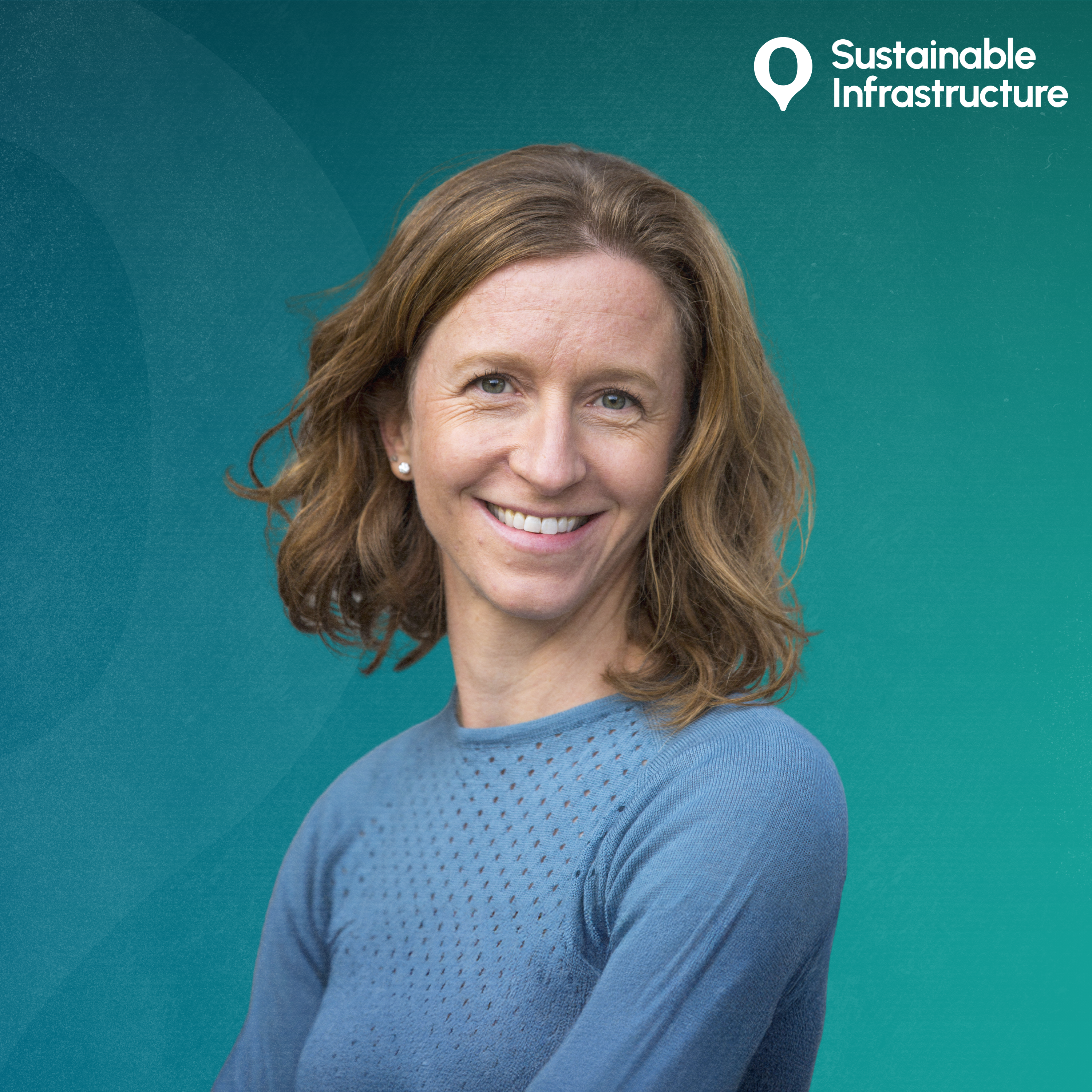
Marta Bouchard leads Autodesk's sustainability solutions team: responsible for enabling the business to build and scale technology that ensures sustainable design becomes the default workflow. In this episode, she explains the strategic logic behind Autodesk's partner ecosystem, what it takes to democratise carbon measurement through BIM-to-carbon workflows, and why "just start somewhere" remains the most honest advice she can give.
Why platform companies are the missing link in infrastructure decarbonisation
When Marta Bouchard moved from sustainability consulting to Autodesk four years ago, she made a deliberate bet: that the fastest path to industry-scale change wasn't working project by project; it was changing the tools everyone already uses. Working at Autodesk was the perfect answer to that realisation.
The ecosystem approach
Autodesk's answer to the complexity of sustainability has been to enable an open partner ecosystem in which specialised tools, such as ORIS for materials carbon accounting, integrate directly with Civil 3D and other design software. The logic is sound: different markets, different carbon methodologies, different regulatory frameworks. No single company can master all of it. The platform becomes the connective tissue.
Why sustainability is fundamentally a data problem
One of the sharpest points Marta makes is that sustainability can't be treated as a separate workstream from design. The data has to live in the same place where engineers are already working. When carbon calculations are disconnected from the design environment, they happen too late to influence decisions. Embedding them into Civil 3D in real time, as engineers iterate on designs, changes the economics of decarbonization: fewer exports, less delay, more design alternatives considered.
A one‑third variation challenge revealed through a collaborative embodied carbon PoC
An Autodesk–WBCSD proof of concept found a ~34% variation in embodied carbon results when six AEC firms assessed the same project using the same BIM model but different workflows and assumptions. The findings highlighted an industry‑wide alignment challenge, reinforcing the need for greater transparency and standardization in BIM‑to‑carbon practices. Marta points to this as an area where Autodesk can enable consistency and interoperability across the AECO industry, improving confidence and comparability in carbon assessments.
What comes after carbon
Carbon is the baseline, not the destination. Marta points to biodiversity and circularity as the next frontiers: both interconnected and requiring the same infrastructure of data, measurement, and collaboration that the industry is now building around carbon. The framework matters as much as the metric.
Her advice to anyone starting tomorrow
Start somewhere. Don't wait for the perfect methodology. Work within your sphere of control. And recognise that sustainability is a series of trade-offs solved collectively.
Guest bio
Marta Bouchard is Sustainability Solutions Director at Autodesk, where she leads a team focused on embedding sustainability capabilities across Autodesk's software and partner ecosystem. With over 20 years of experience, first as a designer, then as a sustainability consultant, now in technology, she has spent her career translating sustainability principles into scalable practice.
About Autodesk
Autodesk makes software for the design and make industries, from manufacturing and product design to architecture, engineering, and construction. Its infrastructure tools (Civil 3D, InfraWorks, Autodesk Construction Cloud, Forma) are used by firms globally to design roads, bridges, tunnels, and utilities. Through its Sustainability Tech Partner Program, Autodesk connects practitioners with specialised tools - including ORIS - to bring carbon measurement and lifecycle assessment directly into design workflows.