

Listen on YouTube, Spotify and Apple Podcasts
FIDIC represents more than 1.5 million engineering professionals and 40,000 firms across 100 countries. Its contracts have set the standard for how infrastructure gets built for 113 years. But according to its new CEO, the industry still hasn't solved a much older problem: getting paid, and recognised, for what it actually knows.
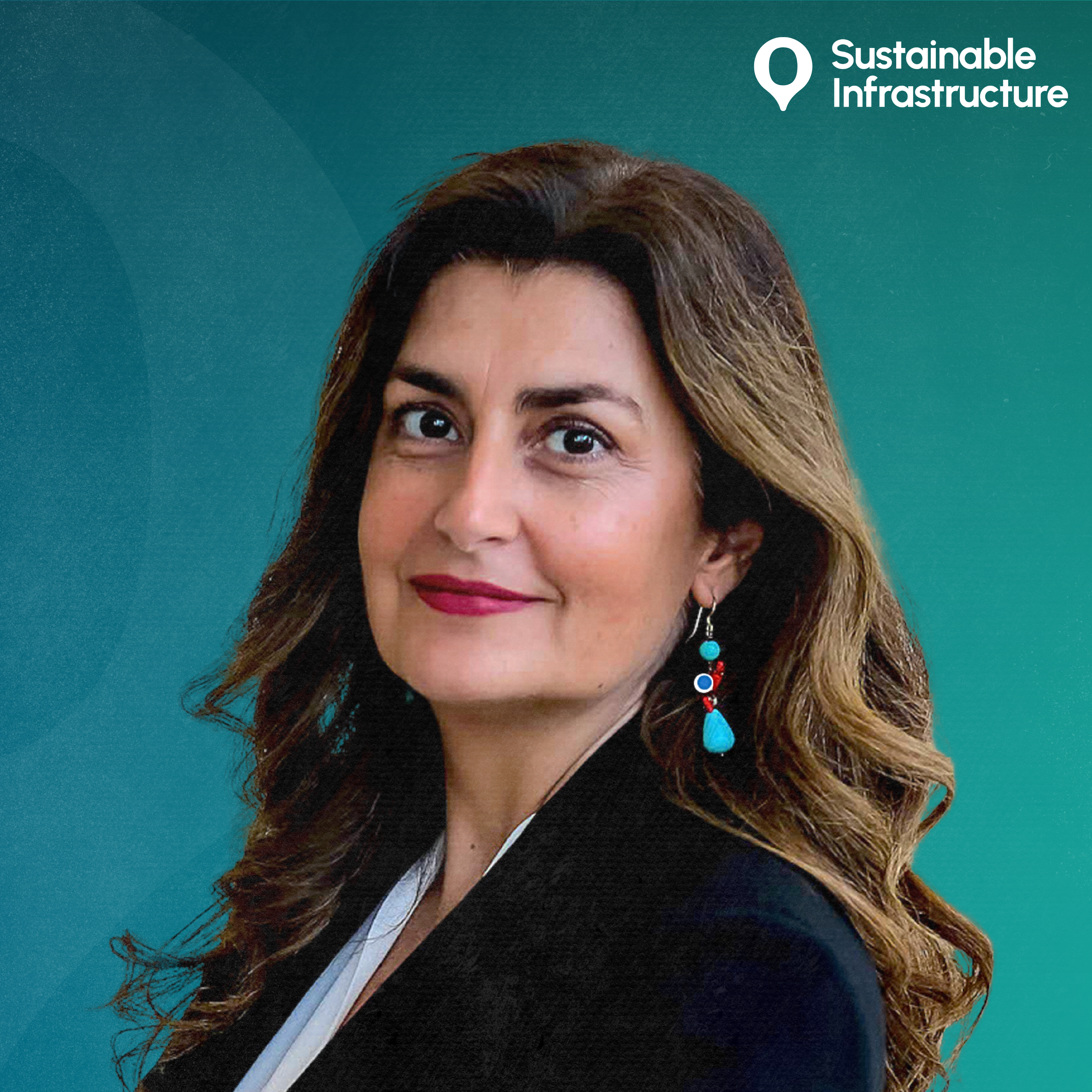
Susanna Zammataro took over FIDIC a year ago, arriving from 18 years as director general of the International Road Federation, where she built the organisation's global road safety data practice. She isn't an engineer. Her background is international law, which she says gives her the same instinct engineers have: take something apart to understand how it works, then rebuild it differently. That instinct is now aimed at a 113-year-old federation she wants to carry into its next century.
This episode covers three things FIDIC is working on at once: building out a carbon management ecosystem members can actually use, pushing multi-criteria procurement past the pilot stage with the multilateral development banks, and setting rules for how engineering firms adopt AI before the tools get ahead of the people using them. The honest takeaway: none of it works without first fixing how the industry values its own expertise.
Why the industry still doesn't value its own expertise
Zammataro's stated goal for her tenure is specific: get the value of consulting and engineering services fully recognised, not just talked about. That sounds like an obvious ambition for a body representing engineers, but she's blunt: it hasn't happened yet, even after decades of the industry acknowledging the problem.
The mechanism she's using isn't a campaign. It's a live piece of regulation. The European Commission is reforming its public procurement directive this year, and FIDIC is pushing to have the value of intellectual services explicitly written into it. The logic: if procurement still rewards the lowest bid over the best-prepared team, no amount of sustainability guidance changes what gets built.
"I would be very happy if, within X number of years, the value of our industry, consulting, engineering, and in general, the value of intellectual services, is fully understood, fully valued. That is still not the case."
Susanna and Nicolas connect this to the fact that engineers are still paid largely by the hour, which she argues measures time rather than the outcome a project actually needs. Her point isn't that technology or new contract models are the fix. It's that under budget pressure, teams default to arguing over line-item details and lose sight of what the project was for in the first place.
Carbon management as an ecosystem, not a checklist
FIDIC's climate work isn't a single guidance document. It's built as two connected layers, and Zammataro is precise about the difference. The carbon management guides, published and publicly available since January this year, work through the entire project life cycle from procurement to contracting, embedded in FIDIC's traditional contract expertise.
The second layer, the Carbon Management Framework (CMF), came from FIDIC's membership network rather than its contracts committee, built by practitioners who identified a gap: project teams needed a way to assess where they actually stood before choosing a tool. The CMF doesn't require carbon expertise to use. It reads a project's maturity level and points teams toward the tools suited to that stage, which is where she places ORIS among the ecosystem's recommended tools for moving assessment into concrete action.
"I am very proud to say that FIDIC has been able to pull together and build an entire ecosystem, what we call the FIDIC ecosystem for carbon management."
The framing matters because of where most teams get stuck. Zammataro says the barrier to carbon management isn't willingness, it's not knowing where to start. Once a team takes that first step, she describes a cascade effect: results compound, and teams start questioning practices they'd never previously examined.
Multi-criteria procurement is leaving the pilot stage
For years, weighted criteria in procurement, scoring bids on environmental and social outcomes alongside price, have been discussed more than deployed. Zammataro points to a shift: the World Bank has moved rated criteria from an occasional practice into something embedded across its contracts, treating a project as inherently multi-criteria rather than price-first with sustainability bolted on.
She's careful not to oversell it as a universal fix. Multilateral development banks themselves, she says, are the ones cautioning that rated criteria work differently depending on the project type and the country, and that a single system cascaded down without accounting for local context doesn't hold up.
"This idea that we can have a single system, apply and cascade down into countries without understanding context, is wrong."
FIDIC's own contracts committee is building a new set of tools focused on early market engagement and collaborative contracting, aiming to formalise practices that she says were already present in FIDIC's contract tradition. A first version is due at the Contract Users Conference in London this December. Alongside it, FIDIC is preparing a paper on Quality-Based Selection for its Global Conference in New Delhi this September, emphasising outcomes over procedures. Her diagnosis of where most troubled projects actually go wrong isn't the contract terms; it's insufficient project preparation before work starts.
AI adoption starts with governance, not tools
FIDIC surveyed its reach on this directly. At the Global Leadership Forum, an invitation-only gathering of 100 CEOs that the federation convenes annually, Zammataro says she expected more anxiety about AI displacing consulting engineering work. What she got instead was closer to cautious optimism: AI treated as a disruption to manage, comparable to the telephone or the Internet, rather than an existential threat.
Her advice for firms figuring out their next step is deliberately unglamorous. Before scaling AI into delivery work, define internally who can use it, for what, and who signs off on the output. If a firm is outsourcing traditional engineering work to AI, someone with real experience still has to check what comes out against reality before it ships.
"There should always be somebody who has the experience, a level up, that checks what comes out of AI to say it's good, it's not good, matches it with reality works."
FIDIC published a report on AI with EY (Ernst & Young), though she's candid that any such report is close to obsolete the moment it's released, given the pace of change. Her underlying argument circles back to the episode's throughline: tools accelerate modelling accuracy and speed, but they don't replace the professional judgement that adjusts a tool's output to a project's actual context.
Her advice to anyone starting tomorrow
Asked for one concrete change she'd want to see in the industry within 12 months, Zammataro didn't point to a new standard or contract clause. She pointed to people: real investment in upskilling staff, starting immediately rather than once AI adoption forces the issue.
Asked for one existing practice that deserves wider adoption, she named project preparation. Not a new idea, but the one she sees underneath most project failures and litigation, more often than any dispute over FIDIC's standard contract clauses themselves.
Full interview
The following is an edited transcript of the conversation.
Introducing Susanna and FIDIC
Nicolas: A real pleasure to have you, Susanna. You've been in this industry for so long. I will let you introduce yourself. Would you tell us a few words about you first and about FIDIC, of course?
Susanna: Thank you, Nicolas. Indeed, I am new to FIDIC, and not just as a new FIDIC CEO, but I'm a bit off to the usual ecosystem of FIDIC, though definitely with my feet well on the ground when it comes to infrastructure. I served as the director general of the International Road Federation for many years. I spent 18 years with IRF, and that's where our paths first crossed. I am not an engineer, and I think that always surprises people. I am fond of engineering, though. I think my mind functions like a mechanical engineer, because my background is more international relations and international law, and I always draw this parallel between law and engineering: we like to take things apart to understand how they function, so we can then reassemble them differently.
I am delighted to be the CEO of FIDIC for the past year, a fantastic new adventure I decided to start with the same passion and commitment that framed my involvement in IRF. I'm a very curious person, and FIDIC is delivering plenty of new tools, people, and networks. The federation is 113 years old, so there's some modernisation that has to happen. As a new CEO, I'm excited about the opportunity to transition the organisation from this fantastic 113 years of legacy into something that can respond to the needs of the sector, beside the needs of our members.
Nicolas: That's an amazing organisation. I've been myself, across countries, meeting and reaching out to FIDIC contracts, FIDIC projects, FIDIC engineers, FIDIC specialists.
Susanna: Maybe, for those not familiar with FIDIC: we are a federation of national associations, 100 countries around the world, more than 40,000 companies, more than 1.5 million engineers. Definitely a wealth of experience and network.
Nicolas: My question regarding FIDIC now is about change, because we are in this sustainable transition for infrastructure, and FIDIC has a lot to offer here. Where do you think the most relevant drivers are for this change? Is it the contract? The standards? The tools? Behaviours?
Susanna: That's an interesting question. I think it would be reductive to limit the impact and influence of FIDIC exclusively to the contracts. Of course, contracts are our bread and butter, as we like to say within the federation. Those contracts have really set the standard for the industry. But I would say today, what really makes FIDIC stand out is the body of knowledge within the federation, the set of tools we've developed over the years to respond not just to the needs of our members, but those of our industry. And the network is this fantastic convening power, bringing all those people together. That's where the beauty happens: when everybody comes with a different perspective, a different expertise, a different background, and we're able to use the best of each side to build something that delivers value to the industry. And delivering value to the industry means delivering value to people.
Carbon management as an ecosystem
Nicolas: If we focus a little on carbon emissions, mitigation strategies, and carbon quantification, all of which matter so much in the current climate condition, what is FIDIC doing in that field? And what tools or methodologies have you developed so far?
Susanna: A very timely question, because it gives me the opportunity to show exactly how we function as a federation. I am very proud to say that FIDIC has been able to pull together and build an entire ecosystem, what we call the FIDIC ecosystem for carbon management. We start with the carbon management guides, delivered last year and available to the public since January this year. That part of the work is really embedded in our tradition of contracts. On the other side, we have the Carbon Management Framework, which spanned out of the expertise and network of people coming together and saying: the industry needs a bit of guidance and tool delivery. A fantastic group of people from our membership came together to build the CMF.
The carbon management guides are what you use to shape the process from procurement down into contracting, embracing the entire life cycle of the project. The Carbon Management Framework is more tailored to project teams; its roots are on the ground, and you don't need to be a super expert to use it. It's a fantastic framework that lets you understand the maturity level of the project, and from there, provides concrete guidance on which tools to use depending on that maturity level. And I'm happy to know that ORIS is also amongst those tools being used to bring project teams from the assessment level into concrete action.
Nicolas: I've been through the tools indeed, and it goes very far into governance, collaboration, all the skills necessary to resolve this complex equation of any project. And the carbon management ecosystem is also a way to get carbon targets on a project now, not just a price, but an impact target.
Susanna: Yeah, absolutely. From our experience talking with the membership, firms, and governments: carbon management can be daunting. When you start, you don't know where to start. The maturity level of teams and projects is very difficult. I don't think there's a good understanding right now, or willingness, to move forward on sustainability. It's just that it's, de facto, difficult. Like you, we were trying, from our side, to simplify things and help move that first step, because once you take that step, you'll see a cascade effect. You'll see positive results in many different ways, and start looking at things you've always done a certain way, differently. That's where change starts really being rooted.
Public and private alignment on sustainability
Nicolas: There is a lot of steps still ahead of us in this journey, but it's great to see FIDIC take a step here. Which leads us to policy: because FIDIC is so big and so influential that you're acting as a policymaker, definitely, on different aspects. You've been very much on the public policy, advocacy, and capacity-building side, and now with FIDIC you're also very close to the private side of things. Where do you see the most traction, or the share of roles, between the public and the private, in terms of alignment on sustainability?
Susanna: I think, as I was mentioning, we're lucky that after all these years, many of us working on sustainability have reached a good understanding of what needs to be done. What I notice, from both public and private sector: we don't always have all the capabilities, and that's one of the key items we need to work on. We spent so many years making sure the need is understood, that the problem is understood, and that's fine. Now we need to move into action. That action is still quite scattered, partly because we don't have skilled professionals to the extent we need to move at the pace we need to move. Things are looking better, but there's a lot of work to be done on creating skills and capabilities.
Nicolas: When you mention pace, you mention scale as well: bringing consistency and making sure scale and pace go in a consistent manner. Let's have a few words on the digital approach you've been taking. For public-private policies, I think there's an important chapter now, especially with the recent UN Decade for Sustainable Transport, the first time a UN Decade has particularly focused on transportation, which is a good sign. In the space of multilateral development banks and international financial institutions, there's more and more understanding that a project is multi-criteria. We see the World Bank, for example, having rated criteria embedded in all contracts, they've worked on multi-criteria for years, but now it's becoming a reality: weighted analysis of social, environmental, and economic together. How is FIDIC approaching that, and making it more standardised or operationalised?
Susanna: I want to take a moment to acknowledge the tremendous work done by the multilateral development banks. They're not just lending money and delivering projects, their role has changed dramatically over the past years. The push towards rated criteria is part of that, a good step forward in making sure the final outcome delivers quality infrastructure, quality infrastructure to people. Sometimes projects and the systems around project delivery are so complex that we forget the core: we're here to deliver quality infrastructure to people. We have decades of close collaboration with the banks, on the Carbon Management Framework, on shaping procurement and contracting. They always reject dictating to sovereign countries, and it's not their job to tell a country what to do. But practice has shown, and I can give examples from road safety, how much the positioning of the MDBs has steered and driven change. Their role is to give the right signal in the right direction, which is perfectly in line with what FIDIC does. We see a very important partner in the MDBs: a lot of discussion around market engagement, collaborative contracts, and rated criteria, which I must say, do work. But it depends. The idea that we can have a single system, apply it, and cascade it down into countries without understanding context, is wrong. We've heard from the banks themselves that rating criteria are fantastic and something they're pushing, but it depends on the type of project, the country, the context. We're all aligned towards delivering quality infrastructure, and rating criteria are one path to that. On collaborative and early market engagement: from our perspective, nothing new. If you look at FIDIC contracts, early market engagement and collaborative nature have always been there. What we're doing now, and the FIDIC contracts committee is working on this, is a new set of tools to further enhance and help. The tools are already there, it's that we're finally realising it's necessary, and we have the means to use them. We're adding extra layers of tools, and hopefully by the end of this year, around December, at our Contract Users Conference in London, we should be able to present a first set of tools to help this transition.
Nicolas: I really like that, because some project agencies or owners can easily get lost in the complexity of the offering, even when the offering is excellent quality. This layer you're describing, supporting, guiding, helping select the right parameter for a project, is absolutely crucial. It makes me think of rating criteria as a great transformation in how contracts are awarded, but it's not one-size-fits-all. Different rating for different criteria depending on the project, and we need to articulate that. That's a job for engineers, obviously.
Susanna: Yes. I really want to reiterate that, independently of the tool you're using, we shouldn't lose focus on the goal, which is quality infrastructure. Sometimes that's rated criteria, sometimes early contractor engagement or a collaborative approach, whatever you want to call it, but the destination is the same. I'm happy to report we're working on a new paper on Quality-Based Selection, to be released at our flagship event, the FIDIC Global Conference, taking place this year in September, in New Delhi. Quality will be at the centre, and delivering quality infrastructure will be at the centre of our exchanges. One other point we're really hammering on as a key message is project preparation. All this early contractor engagement and market engagement should, in the end, lead us to prepare better projects, because that's where we see the shortfalls most of the time. Projects that fail, or end up in litigation, or run into problems, are usually because, one, they've changed too many clauses in the FIDIC contract and changed its nature, but mostly, because of a lack of proper project preparation.
Nicolas: This is crucial in delivering a good project. I fully subscribe to that too. Part of this preparation is making sure the goals are there, the collaboration is in place, the ecosystem is in place, the tools are there, everything well set. That avoids big claims and heavy delays. Maybe one word on PPPs, public-private partnerships. How do you see them evolving in the landscape? More common? Still reserved for a few mature economies?
Susanna: I guess there's been progress in that direction. It depends whether we're speaking about a typical PPP-type contractual relationship. We know, especially in the road sector, how complicated the negotiation of a PPP contract is. In general, when it comes to collaboration between the public and the private, it goes back to what you said: making sure we work from the beginning, focusing on the outcome to achieve, rather than the technicality per se. By working together, we're able to define a proper way forward in terms of achieving that outcome, the quality we want to achieve. So: progress, yes, we know PPPs from experience; complex, yes, it's one of those tools that's out there and useful, but not to be used everywhere, all the time. I'd distinguish the different facets and layers when we speak about collaboration between the public and the private. If it's in the real form of a PPP, we know the answer: practice has shown it's fantastic, but not for all projects.
On the value of intellectual services
Nicolas: Let's get back to you a little. You said 18 years in IRF, where you were very active in many fields, one of those being road safety, where you collected and shared data, increasing the practice, and that's been very successful. Where do you see your next role now with FIDIC, and where will you personally push for the next 18 years?
Susanna: That's an easy one. In terms of the target I've given myself as a new CEO, as I mentioned at the beginning, it's making sure we transition FIDIC, and equip it, with what it needs to continue to thrive for another 100+ years as it has done. In terms of the objective as an organisation, for me it's very clear: I would be very happy if, within X number of years, the value of our industry, consulting, engineering, and in general, the value of intellectual services, is fully understood, fully valued. That is still not the case, and that's where I see FIDIC playing a big role going forward. We're stepping up our efforts on policy and advocacy work in that respect. We don't feel intellectual services, which are really the core and the heart of the project, are fully understood, valued, or recognised as they should be. So ask me again in a few years whether we've achieved that. There's a reform of the public procurement directive, for example, at the level of the European Commission this year, and this is one of the fundamental messages we're bringing forward: making sure the value of those intellectual services is fully understood and valued, because that's what, in the end, delivers quality and delivers infrastructure. Yes, technology will come into the picture. Technology doesn't deliver everything without the people.
Nicolas: One good change might also be to stop paying engineers by the hour, because that doesn't represent the value it brings to the table. I'll ask you back on that one, it's a huge debate.
Susanna: With shrinking budgets and more pressure, I guess when you're under pressure with so many challenges, it's extremely important that, all together, we're able to stop, pause a moment, and focus not on the detail we're discussing, but the final outcome. What are we trying to achieve? I have the impression that, unfortunately, in our daily jobs, we're always under pressure, moving quickly, and we lose sight of the core.
Nicolas: But you have, with FIDIC, a great platform with already a good balance between engineers, contract specialists, and lawyers. That's already a good representation of what a good contract, or a good project, could be.
Susanna: Absolutely. That's the beauty of FIDIC: speaking on behalf of, and being the voice of, consulting engineers, while side by side with the people who shape projects from the legal point of view too. That's really an asset FIDIC has, and probably what's made this federation so relevant over more than a century. The combination, the articulation of different backgrounds and different thinking, and how we bring it all together to serve the industry, I still find almost magical. Lawyers and engineers speak a different language, I know that first-hand, but there's always a ground to find a common language and a common way forward.
Nicolas: So if I hear you well, your mandate is about quality and purpose for those projects. What about sustainability here? Is it a big part of it? How will you make sure quality also embeds sustainability and more criteria than environmental impact alone?
Susanna: I can reassure you that sustainability has always been at the core of who we are as a federation, and what we deliver. It's ingrained in our values, quality, integrity, and sustainability, you'll see it when you land on our website. We've been working on sustainability for many years, which is more than environmental sustainability; we've made a strong commitment to what we now call social outcomes. A project has to be sustainable in many different ways: quality, transparency, integrity, and the value we deliver to people, that remains central to our work. And we'll invest in it even more, because this commitment to social outcomes is clearly spelled into our new strategy. As a new CEO arriving, we approved a new five-year strategy, 26-30, and you'll find it spelled out very clearly there: our commitment to sustainability and social outcomes.
AI and digital: governance before scale
Nicolas: Maybe a word on digital, we cannot escape that, and we even dare to say AI. How do you think AI and digital will impact FIDIC, will impact projects, and will stimulate new capacities and developments? What's FIDIC's position on AI and digital?
Susanna: It's something you cannot hold back. AI is already there, so we just need to understand what it can deliver in terms of support and value to the industry and to our work, whether internally as a federation or more broadly within the wider industry. There's a lot of talk about the risks of AI, especially for a profession like consulting engineers. The topic was at the core of our discussions at the Global Leadership Forum, an event we hold every year, bringing together, by invitation only, 100 CEOs to think and debate the big challenges of the industry. I was surprised, honestly, that bringing all these heavy hitters of our industry into the room, the message was actually very positive. It's looked at more as an opportunity than a risk. That doesn't mean it comes without risks and adjustments, but it's like any other technological disruption we've experienced, the telephone or the internet. Their point of view was: it's another one of those transformations we simply need to embrace to make the most of it. It's not easy. It requires clear steps forward, individually, as a company, as a federation, as an industry, and at the highest level in terms of how governments think about regulating AI and technology in the future. So yes, it's going to be a bit of a shake-up here and there, but technology also comes with plenty of opportunities.
Nicolas: And as we said before, we have new goals, and those new goals can also be attained with new tools and new capacities. But it's a heavy industry with lots of projects, different shapes, different landscapes. So it's definitely complex to adopt new technologies in that space.
Susanna: Yeah. And probably what we need to do, and I'm anticipating a question everybody has, that you'll see discussed at any event about AI: what should be my next step? If there's one thing I've learned in all this discussion, it's that we need to take care of AI governance already at the level of your team, your company, to be able then to deliver. It's one of those things that looks daunting, but starting with that simple step, defining with your team who can use it, when, for what, and who's the final validator, matters. If you're outsourcing some traditional work to AI, there should always be somebody with the experience, a level up, who checks what comes out of AI: is it good, is it not good, does it match reality? So my advice, and this is really what I noted myself as a professional, is to make sure you have clear rules of engagement and governance internally, within the team, within the company, and then things will flow more smoothly. No one has all the answers right now. We produced an interesting piece of work, a report on our website on AI with EY, Ernst & Young, with a lot of interesting information in there. But any report is immediately obsolete, because the pace of change is so fast.
Nicolas: We at ORIS usually say AI brings more speed, of course, but also consistency and scalability to what we're doing. We're reaching new horizons with that, but in control. The thing is to stay in control, and make sure it's not the other way around.
Susanna: It loops us back to the beginning of our conversation, where I said you really have to take care of your people, making sure you have skilled professionals who understand not just the tool and how to run it, but who can loop back and adjust the output to the context of the project, being able to understand it. Those tools are fantastic, the pace of acceleration, the level of accuracy, the modelling before we even start construction, it's mind-boggling, a fantastic step forward in optimising our resources. And you, from ORIS, know better than anyone how a tool like ORIS lets us look at the project even before we move a single stone, making sure we make informed decisions backed up not just by AI, but by robust data.
Nicolas: Massive changes ahead, but for good, if it's under the control we want.
Susanna: I think so. I want to stay optimistic.
Closing questions
Nicolas: In the next 12 months, if you had to name one concrete change you'd like to see in the industry, what would it be?
Susanna: Really investing in upskilling staff and resources, really working on the skills and capabilities of people. AI can deliver wonders, but you still need the skilled professionals out there, so it's extremely important to keep that in mind, and start working yesterday, not tomorrow.
Nicolas: So that we don't forget our people and our skills in this new battlefield. Second and last question: if you had one practice or example you've seen work brilliantly these last months, across the countries and the sector, what would it be, something that deserves wider adoption?
Susanna: Of course, I'm taking the advantage to promote FIDIC's work. But more seriously, I think, as we said, it's project preparation, fundamental. Good project preparation is fundamental to deliver the outcomes we have in mind. So, good project preparation, then FIDIC contracts, because of their nature and how they've been built, to make sure we focus on the outcome and the quality, and this figure of the engineer you find in FIDIC contracts, there as a neutral party managing the employer and the contractor, making sure the project delivers on time and within budget. And the third layer I've seen working really well: multilateral development banks have a tremendous role to play. They're doing it more and more, stepping in, in some regions, accompanying their clients by the hand with technical assistance, empowering them, providing not just the money and the loan, but the skills, the tools, and the capacity to build proper processes, also at the institutional level, so fundamental to delivering a good project.
Nicolas: Recently one MDB was telling me: "we don't deliver only money, we deliver smart money." I think this is exactly it.
Susanna: By that, they mean the technical assistance where you really work with the client. I'm seeing it more and more, and I've seen it first-hand, where the MDBs have stepped in to do that. You see the project move in the right direction. So I encourage them to do more of that, and of course we stand ready with them, as we have for so many years, to help them move the needle.
Nicolas: Thank you so much, Susanna. I think we'll stop here because we have so much to say. It was a great pleasure to have you, thank you for your time, for your advice, for your voice, an important voice for the industry. It was a great hour together.
Susanna: Thank you, Nicolas. I appreciate the opportunity to tell you a little more about myself, FIDIC, and our beautiful industry.
Guest bio
Susanna Zammataro is CEO of FIDIC, the International Federation of Consulting Engineers, a role she's held for one year. Before FIDIC, she spent 18 years as director general of the International Road Federation, where she built its global road safety data practice. She isn't an engineer by training, her background is in international relations and international law, and she describes bringing that same instinct to FIDIC: take a system apart, understand how it works, then rebuild it for what the industry needs next.
About FIDIC
FIDIC, the International Federation of Consulting Engineers, is a 113-year-old federation of national engineering associations representing more than 1.5 million professionals and 40,000 firms across 100 countries. Its standard contracts have shaped how infrastructure projects worldwide are procured, delivered, and disputed, and it now works closely with multilateral development banks and industry members on carbon management, quality-based procurement, and AI governance.