


Hello, infrastructure leaders and operators,
What happens when suppliers begin measuring carbon at the product level rather than relying on generic industry averages? The implications are deeper than you might think at first glance: verified product-level data lays the foundation for carbon to serve actual infrastructure mitigation rather than a basic compliance metric. See more on that below...
We also come this month sharing the deep discussions we had over the last few weeks with leaders around the globe... a bit mysterious? Discover our ORIS Podcast!
Finally, read the summary of the 3 research papers we will present at the 17th PIARC World Road Congress on Road Winter Service, Resilience and Decarbonisation in Chambéry, France.
Product-level aggregate carbon footprint: what happens when suppliers start measuring
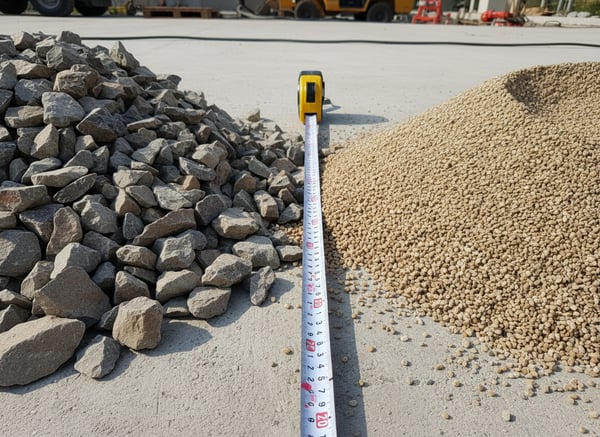
Starting January 8, 2026, the Construction Products Regulation requires product-specific carbon declarations for aggregates sold in the EU… right?
National averages won't meet compliance, site-level estimates might not either, or at least it isn't very clear right now… In reality, this regulation is implemented gradually. For the new CPR to be applied to products, each product group should harmonise its standard. As of today, the standards for aggregates are expected to be ready by 2029-2031.
Most aggregate suppliers we are speaking with are just now beginning to understand what this means.
Over the past 18 months, we've been working with quarries across Europe to establish their first product-level carbon measurements. Many came to these conversations expecting the exercise would be straightforward, confirming what they already believed: limestone is limestone, granite is granite, and carbon differences between products would be minor. That assumption falls apart when the measurements start coming in.
Here's what we're discovering as suppliers measure for the first time, and why it will change how infrastructure projects are specified after CPR compliance kicks in.
Sustainable Infrastructure: a newsletter, and soon, a podcast
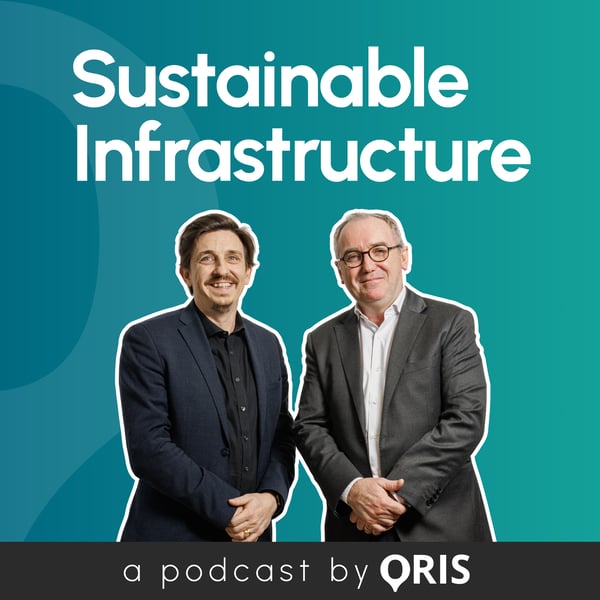
You might have seen it on LinkedIn: this year, we are launching a podcast.
The pitch is simple: a podcast (audio and video on YouTube) where engineers, policymakers, and construction leaders share their experiences of how they act to achieve sustainable infrastructure. Interviews are led by either Renaud de Montaignac, CPO and cofounder of ORIS or me. Our first guests come from organisations such as IRF, FIDIC, Mott MacDonald, AECOM, Autodesk...
We are very excited to share these amazing conversations with you! Link to Sustainable Infrastructure
PIARC 2026: from methodology to practice

To finish, I wanted to give you a sneak peek at 3 papers we will be presenting in beautiful Chambéry in March. They all document methodologies that we deployed on real projects.
Enhancing Rural Road Climate Resilience Using an AI and Data-Driven Methodology by Hugo Pley-Leclercq, Koji Negishi and Danilo Ebbinghaus
Assessing thousands of kilometres of rural road network manually is impractical. This paper presents the methodology we developed for Roads4People with UNIDO to systematically identify where climate risks are concentrated and prioritise interventions by severity.
Sustainable Highway Development Integrating LCA, Circular Economy, and Carbon Offsetting in Armenia by Danilo Ebbinghaus
A new highway construction project in Armenia, a critical infrastructure development, faces significant climate-related challenges. This paper documents how we used digitised LCA methodology (ISO 14040/44, EN 15804) to quantify the project's carbon impact, then optimise across three dimensions: circular economy, carbon offsetting, and operational efficiency.
A Comprehensive Methodology for Digital Climate Resilience Assessments by Danilo Ebbinghaus, Renaud de Montaignac, Koji Negishi
Climate resilience for infrastructure requires moving from reactive repairs to systematic risk assessment. This paper presents our AI-driven methodology that combines climate projections (IPCC models), infrastructure vulnerability analysis, and socio-economic impact measurement into a single Resilience Risk Index.